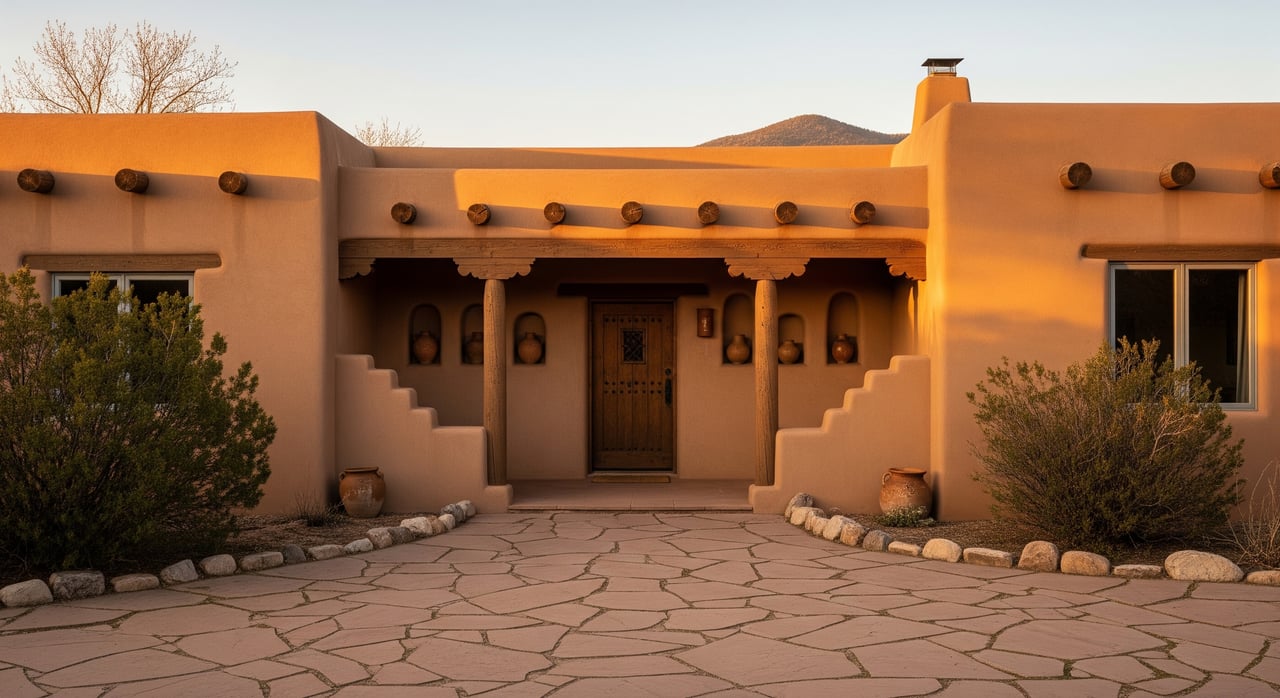
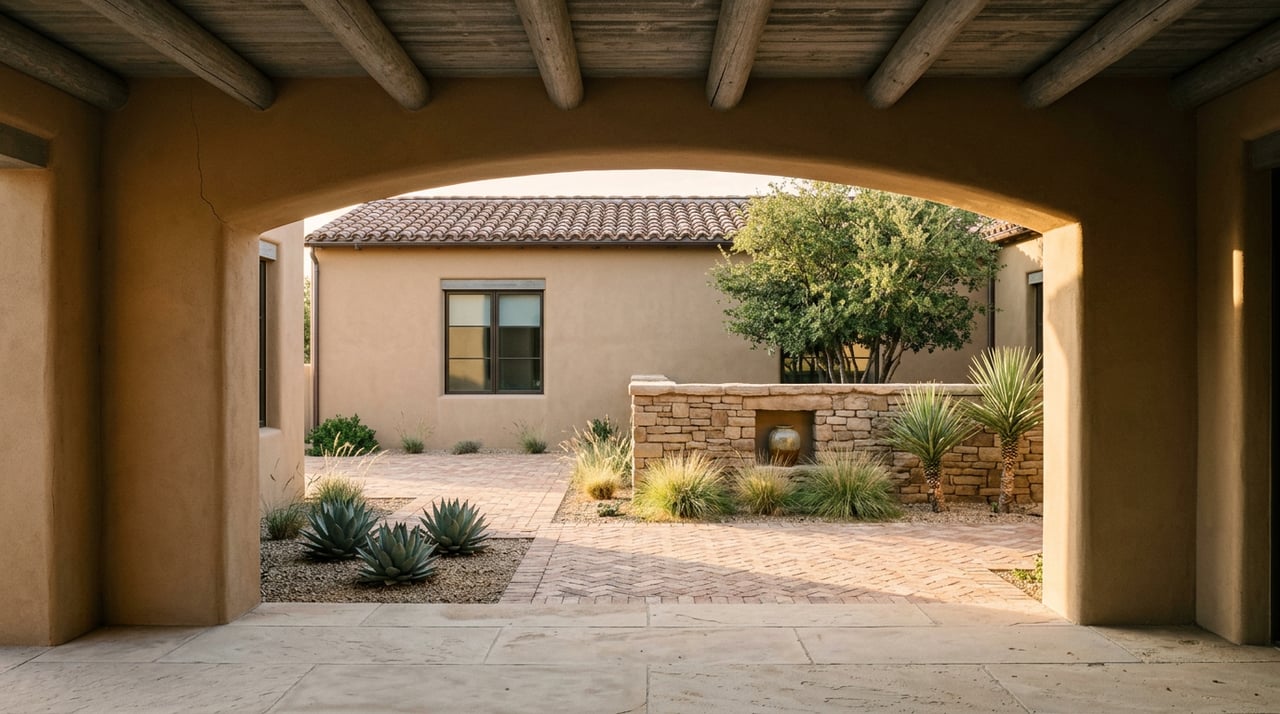
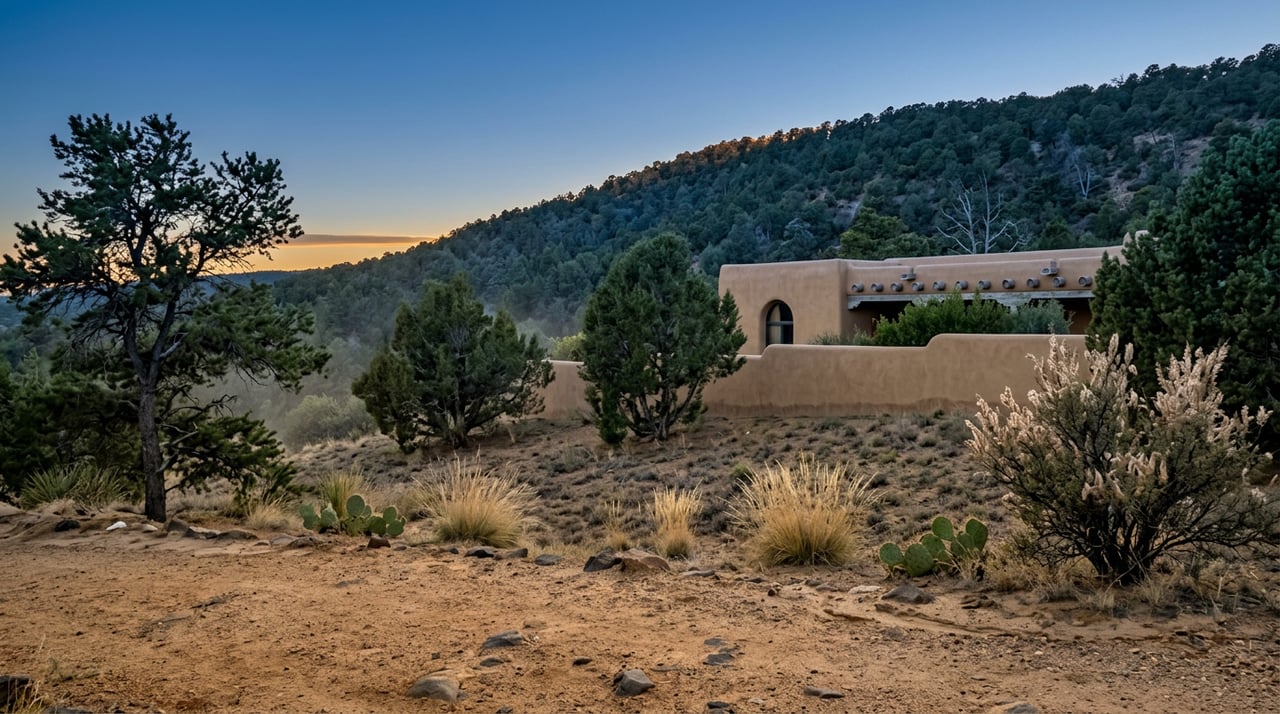
If you picture Santa Fe, you probably see soft earth-toned walls, projecting wooden beams, and rounded corners catching the evening light. That image is Pueblo Revival architecture, a regional style that shapes how the city looks and feels. If you plan to buy or sell in Santa Fe, understanding what makes a home “Pueblo Revival,” how it differs from true adobe, and what to expect for maintenance and permits will help you make confident choices. This guide breaks down the origins, defining features, local rules of thumb, and practical tips tailored to Santa Fe. Let’s dive in.
Pueblo Revival, defined
Pueblo Revival is a 20th-century architectural style inspired by the traditional dwellings of Pueblo peoples and the Spanish Colonial building tradition of the Southwest. It reinterprets recognizable elements such as thick walls, flat roofs, vigas, and earth-toned finishes for modern buildings and homes. You see it in downtown landmarks, museums, hotels, and residential neighborhoods throughout Santa Fe.
It is important to note that Pueblo Revival is a revival style, not a direct continuation of Indigenous building traditions. The style borrows visible cues from living Pueblo architecture. When you talk about or live in a Pueblo Revival home, it helps to acknowledge that inspiration and respect the cultural context.
How the style took root in Santa Fe
In the early 1900s, local architects, preservationists, and civic leaders promoted a unified look for Santa Fe. The goal was to create a distinct regional identity that honored older building forms while welcoming growth. Over time, Pueblo Revival became a hallmark of the city’s branding and tourism, and it spread from public buildings to private homes.
Architect John Gaw Meem played a pivotal role in defining the style through institutional projects, museum additions, and residences. His work showed how Pueblo Revival could be both traditional in appearance and adaptable to modern needs. Today, the style is easy to find around the Plaza, in the Eastside, and across older neighborhoods where historic homes and compatible infill share the streetscape.
Hallmark features you can spot
When you walk through a Pueblo Revival neighborhood or tour a home, these features stand out.
Massing and roofs
- Blocky, stepped volumes that suggest terraced pueblos.
- Flat or low-slope roofs with parapet walls that create a clean horizontal line.
- Rounded, softened corners and edges that mimic earthen construction.
Exterior finishes and color
- Earth-toned stucco or mud plaster in tans, ochres, and browns.
- Smooth or slightly textured surfaces that read as thick, solid walls.
Wood and crafted details
- Vigas: exposed beams that project through exterior walls. In historic or true adobe buildings they can be structural; in newer homes they are often decorative.
- Latillas: smaller poles or slats between vigas, often visible in ceilings and porches.
- Portales: deep, shaded porches or covered entries.
- Nichos: recessed wall alcoves for display.
- Kiva fireplaces: rounded, built-in fireplaces that sit low and hug the wall.
- Canales: simple roof spouts that drain water through parapets.
Windows and doors
- Smaller window openings with deep reveals that suggest thick walls.
- Asymmetrical placement or grouped windows to balance massing.
- Heavy wood doors and highlighted lintels that frame entries with character.
Materials: adobe vs stucco-over-frame
You will hear “adobe” used loosely in Santa Fe, but it has a specific meaning. Adobe refers to sun-dried earthen bricks or rammed earth used to make walls. Pueblo Revival is the style. A home can be Pueblo Revival in look and be built of adobe, or it can have modern construction with a stucco finish that resembles adobe.
True adobe walls are thick, often 18 to 24 inches. They create deep window and door reveals and require earthen or compatible plasters and careful moisture management. Many newer Pueblo Revival homes use wood framing or concrete block with cement or lime stucco. These homes can look very similar but have different maintenance and performance profiles.
How to tell what you have
- Look at window and door reveals. Deep, tunnel-like openings suggest thick masonry or adobe.
- Check corners and parapets. Hand-shaped curves can hint at traditional materials.
- Ask for permits, plans, or previous inspection reports that document wall construction.
- Hire a qualified home inspector or preservation specialist if construction type is uncertain.
Living with Pueblo Revival: maintenance and performance
Whether a home is adobe or stucco-over-frame, plan for care that fits the construction type.
For true adobe homes
- Plan for periodic replastering of earthen or compatible exterior finishes.
- Protect adobe with vigilant roof and drainage care. Keep canales clear and parapets sound to shed water away from walls.
- Inspect vigas and other exposed wood for weathering, rot, and insect activity.
- Manage moisture at grade. Maintain site drainage and avoid heavy irrigation near walls.
For stucco-over-frame homes
- Inspect stucco for cracks, especially at parapets, canales, and window openings.
- Repair and repaint or recoat stucco on a regular cycle to prevent moisture intrusion.
- Confirm proper weep screeds, flashings, and sealants at openings.
Energy and comfort
- Thick adobe walls offer strong thermal mass that helps moderate indoor temperatures, especially in an arid climate.
- Older homes may need additional insulation, air sealing, and mechanical upgrades to meet modern comfort and code expectations.
- If the home is historic, pursue upgrades that respect original materials and consult local preservation staff when needed.
Permits and design review in Santa Fe
Much of Santa Fe’s historic core and several surrounding neighborhoods are subject to design review meant to protect the city’s character. Exterior changes, additions, new construction, and replacement of visible features such as vigas, portals, parapets, or roofing often require permits and review. The city’s guidelines typically emphasize low massing, earth tones, compatible materials, and traditional details that reinforce the historic aesthetic.
Before you sketch plans or hire a contractor, confirm whether your property lies in a regulated district and what approvals are required. Check with the City of Santa Fe’s planning and historic preservation offices, and build permitting time into your project schedule.
Buyer tips for Pueblo Revival homes
Use this quick checklist to focus your search and due diligence.
- Confirm construction type. Determine whether walls are adobe, masonry, or frame with stucco. This affects maintenance and energy performance.
- Hire local expertise. Work with an inspector who understands adobe and Santa Fe’s typical roof and stucco assemblies.
- Study the roof and drainage. Flat roofs and canales need routine care; ask about recent maintenance or replacements.
- Review stucco and wood condition. Look for cracks, delamination, or signs of moisture. Inspect vigas and lintels for weathering.
- Ask for maintenance history. Recent replastering, stucco recoats, and roof work can be value points.
- Understand additions. Check that past changes align with design guidelines and were permitted when required.
- Plan upgrades carefully. If you want to add insulation, HVAC, or windows, consider methods that protect character-defining features.
- Consider neighborhood context. In historic districts, future exterior changes may be limited to preserve compatibility.
Seller tips: prep and position your home
A few targeted steps can improve market readiness for a Pueblo Revival property.
- Clarify what you are selling. Note construction type and any historic status to help buyers compare apples to apples.
- Gather documentation. Permits, inspection reports, roof warranties, and records of replastering or stucco work build trust.
- Address visible maintenance. Repair stucco cracks, seal canales, and refinish exposed wood where needed.
- Showcase character. Clean portals, highlight kiva fireplaces, and stage nichos with restraint to keep the focus on the architecture.
- Tune curb appeal. Ensure parapets are neat, yard grading directs water away from walls, and pathways are in good condition.
- Price with context. Compare with similar construction types and locations, recognizing that authentic historic adobes and low-maintenance modern builds appeal to different buyers.
Where to see strong examples
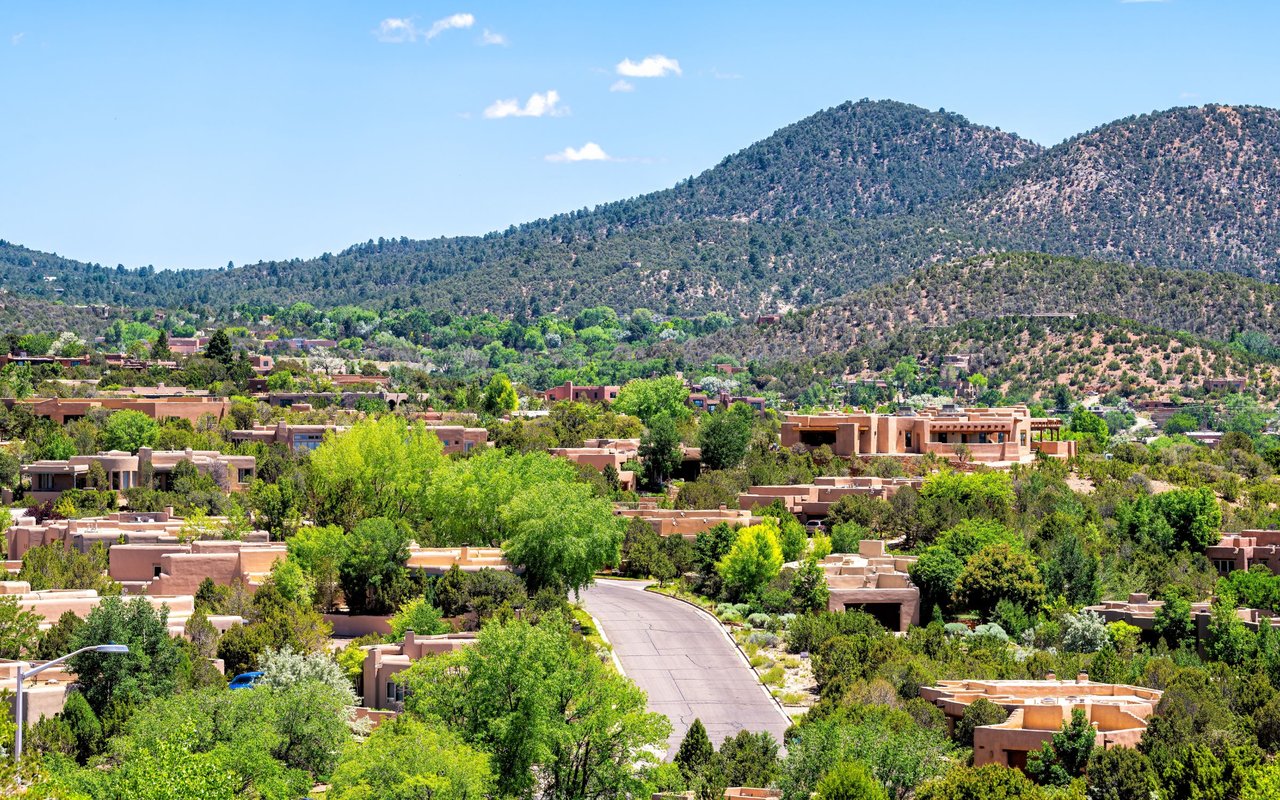
You can experience Pueblo Revival throughout Santa Fe. The Plaza area features prominent public buildings, surrounding museums, and civic structures that reflect the style. The Eastside and nearby historic neighborhoods include older adobe houses and compatible infill that showcase traditional massing and materials. Across the city you will also find newer residences that blend Pueblo Revival forms with modern planning and performance needs.
Cultural respect and context
Remember that Pueblo Revival takes visible inspiration from living Indigenous architecture. When you renovate, describe, or market a home, use respectful language and acknowledge that cultural source. Learning about Pueblo communities and their traditions adds depth to your appreciation of the style and the place you call home.
The bottom line
Pueblo Revival architecture shapes Santa Fe’s identity, from historic districts to modern homes designed to fit the local landscape. If you are buying, understanding construction type, maintenance needs, and design review will help you budget and plan. If you are selling, clarity about materials and a thoughtful presentation of character-defining features can strengthen your position. With the right guidance and realistic expectations, you can enjoy the comfort, beauty, and sense of place that Pueblo Revival brings to Santa Fe living.
Ready to explore Pueblo Revival homes in Santa Fe or prepare yours for the market? Reach out to Unknown Company for local guidance and to Search Homes with a team that knows the style and the neighborhoods.
FAQs
What does “Pueblo Revival” mean in Santa Fe real estate?
- It is a regional architectural style that reinterprets Pueblo and Spanish Colonial forms with features like flat roofs, vigas, earth-toned stucco, and rounded massing.
Is Pueblo Revival the same as adobe construction?
- No. Adobe is a building material and method, while Pueblo Revival is a style; a home can be Pueblo Revival in appearance and built of adobe or modern frame/masonry.
How can I tell if a house is true adobe or stucco-over-frame?
- Look for deep window and door reveals, thick walls, and hand-shaped details, then confirm with records or a qualified inspector familiar with local construction.
Do I need a permit to replace vigas or change stucco in a historic district?
- Often yes; many exterior changes in regulated areas require review and permits, so check with the city’s planning and historic preservation offices first.
How often do adobe homes need replastering?
- It varies by exposure, materials, and condition; plan for periodic maintenance and monitor walls, parapets, and drainage to protect earthen materials.
Can I add modern amenities to an adobe or Pueblo Revival home?
- Yes, but upgrades like insulation or HVAC should be planned carefully to protect character-defining features and may benefit from preservation guidance.
Are there incentives for preserving historic adobe in New Mexico?
- Some state or federal programs may apply to eligible properties; confirm current options and eligibility with preservation offices before starting work.
Does every building in Santa Fe have to be Pueblo Revival?
- No; many areas favor traditional forms through design guidelines, but requirements vary by district and zoning, so verify for your specific property.