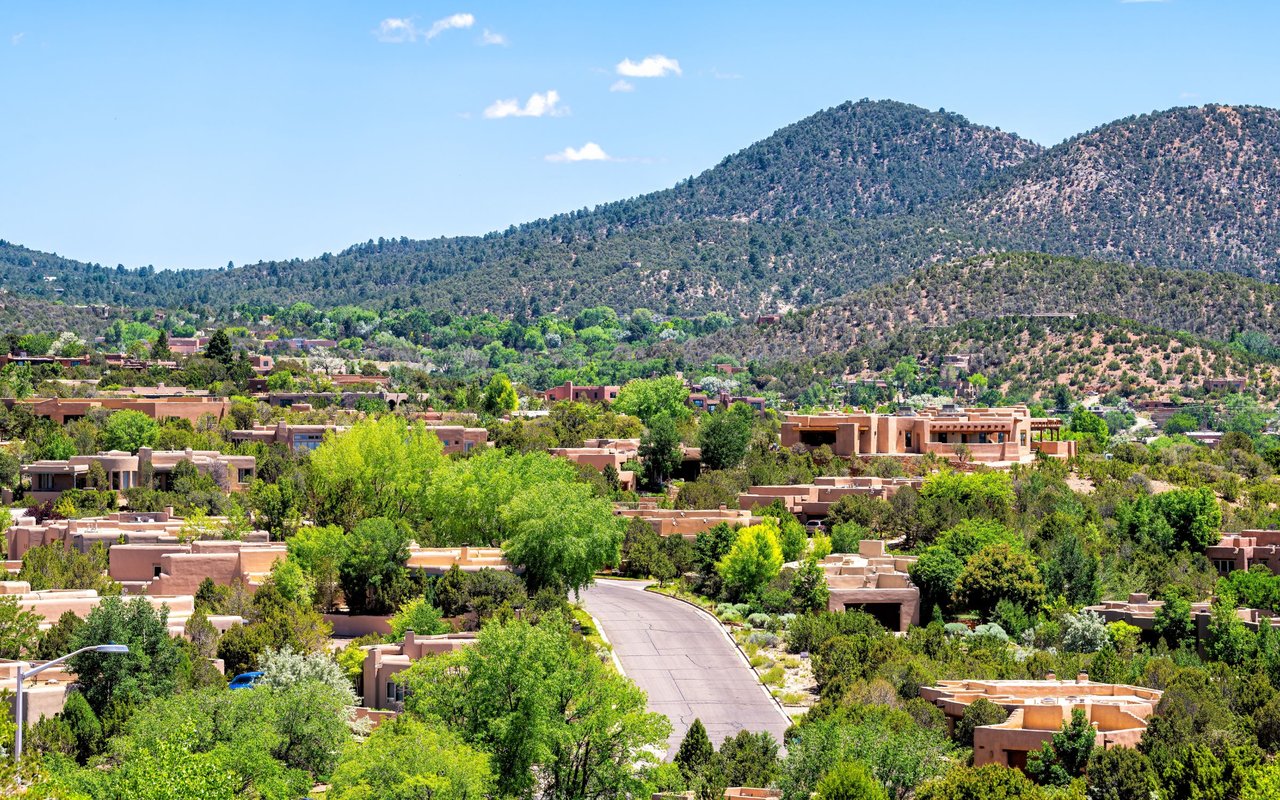
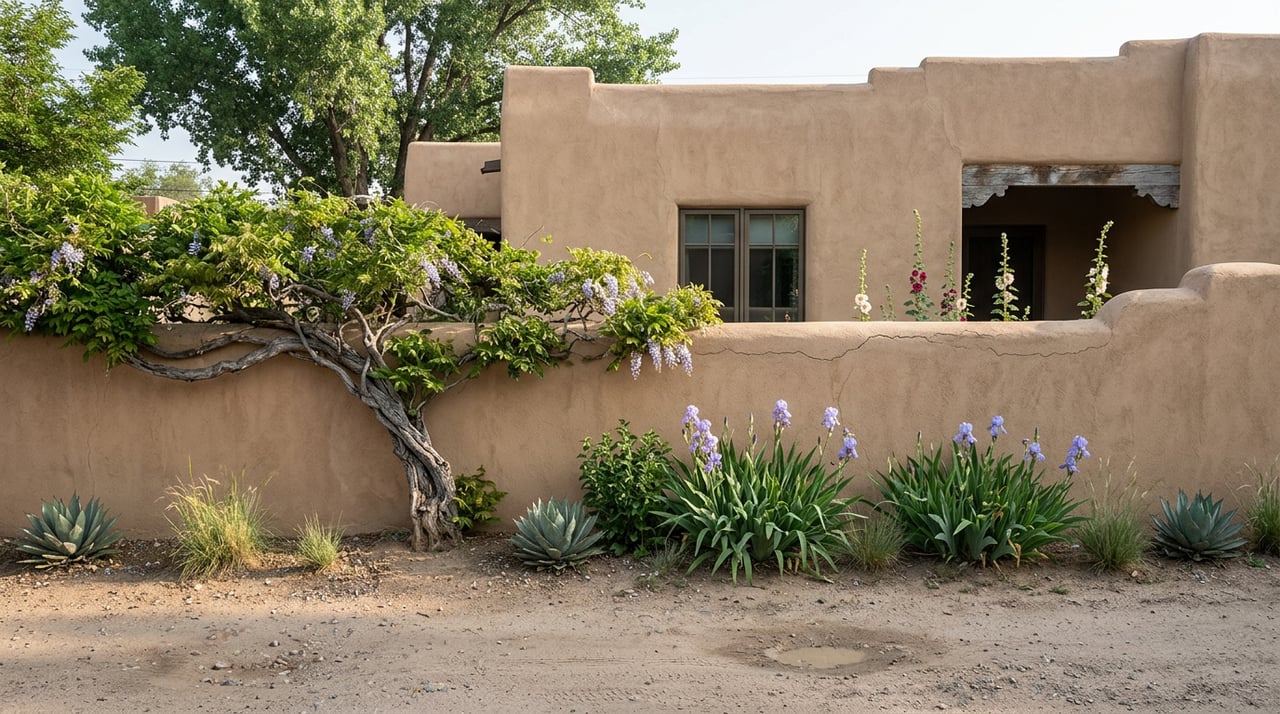
Earlier this summer, the new owners of the Acequia Madre House asked Santa Fe's Historic Districts Review Board for something that sounded like paperwork. They wanted the property, which turns 100 years old this year, downgraded from its highest historic designation to a lower "contributing" status, a change that would have made it easier to convert the building from a private museum back into a family home. The board said no, and the decision made the local news because the house is not a minor case. Built in 1926 by three generations of the Fényes, Curtin, and Paloheimo family, it's a property Old Santa Fe Association board president Randall Bell told the board would be hard to top, calling it "more important" than nearly anything else in the district.
You are probably not buying a landmark on that scale. But the same board, working from the same rulebook, decides what happens the day you want to add a garage, replace a window, or raise a wall on any historic Eastside property, whether it costs $900,000 or $9 million. The price you pay for the house has very little to do with what you're allowed to do to it next. The classification does.
Three Words That Matter More Than Square Footage
Every property inside the Eastside's historic boundary carries a status: significant, contributing, or non-contributing. That single word, buried in a city database, determines which of two very different processes your renovation falls into. The Historic Preservation Division, which administers all five of Santa Fe's historic districts, handles smaller jobs at the staff level. Anything bigger goes in front of the full Historic Districts Review Board, a public hearing where neighbors, preservation groups, and board members can all weigh in before you get an answer.
Filing any request, administrative or board-level, starts with a $75 application fee and the Historic Districts Application Form. What happens after that filing is where buyers get surprised.
| Path |
Typical projects |
Who decides |
Timeline |
| Administrative approval |
General maintenance, minor repairs, in-kind replacement |
HPD staff, after a site visit |
Days to a few weeks |
| Full HDRB hearing |
New construction, additions, height exceptions, window and door replacement on contributing structures, fences and gates, signage |
The Historic Districts Review Board, in a public hearing |
At least one hearing cycle, often more |
The board meets on the second and fourth Tuesday of every month. If your project needs a hearing and gets bumped, or if the board asks for a redesign, you are not waiting days. You are waiting for the next open slot on the agenda, and then possibly the one after that.
Non-Contributing Doesn't Mean No Rules
Buyers sometimes assume that a home labeled "non-contributing," meaning it doesn't itself embody the historic character the district protects, comes with fewer strings attached. Recent board agendas say otherwise. A homeowner on Camino Don Miguel with a non-contributing property still had to bring a new 529-square-foot detached garage and a vehicular gate before the full board rather than settle it at the counter. Another non-contributing property on Canyon Road needed board approval for a 576-square-foot carport addition. New construction and height variances trigger a hearing regardless of whether the existing building is considered historically significant. The label affects how the board weighs your case, not whether you get one.
Nor is a hearing always a one-and-done event. A non-contributing property on Camino Santiago that wanted to rebuild a demolished garage and carport structure as a combined garage, carport, and bunkhouse, connect it to the main residence, and remove a section of yard wall went before the board, got sent back with specific design notes (lower the yard walls, break up the garage's roofline, keep visual separation from the historic house), and had to return with revised drawings before final approval. Budgeting one meeting for a project like that would have left the owners months short.
The Timeline the City Almost Doubled, Then Fixed
For about a year, this process was worse than it is today. In 2022 the city's legal office identified what it considered a gap in the code and began requiring most historic district exemption requests to get final sign-off from the full City Council, on top of the board's recommendation. Architects working in the district said the change turned a difficult process into a genuinely painful one.
"If attorneys are in charge of the built environment, we're heading in the wrong direction."
That's architect and then-board member Anthony Guida, describing the extra layer to the Santa Fe New Mexican in late 2023. City documents at the time estimated the council requirement added six to eight weeks to every exemption request, on top of whatever time the board hearing itself took. Some applicants didn't realize the extra step existed and moved forward after the board's recommendation, only to find out their project still needed a council vote.
The city reversed course. An ordinance sponsored by Councilor Signe Lindell restored the board's full authority to approve exceptions, effective for any case heard after January 13, 2024. Today, if your project needs an exception to the historic district rules, the Historic Districts Review Board is the last stop, not a waypoint before the council. That's good news for anyone renovating on the Eastside now, but the episode is worth knowing about for a different reason: the rules governing your project are not fixed. They have changed materially within the last three years, and they are changing again.
Phase 2 Is Coming, and It Touches Design Standards That Haven't Moved in Decades
In December 2025, the City Council passed Phase 1 of a nearly 700-page rewrite of the city's land development code, the first major overhaul since 1987. Phase 1 was framed as organizational cleanup, but some historic district standards were adjusted inside it despite objections from board members who felt the changes needed more scrutiny. Phase 2, which is where the city has said more substantive revisions to procedures and regulations will land, is still ahead. One board member argued during the Phase 1 debate that standards which have held for almost sixty years shouldn't be tweaked twice in two years. Whether that argument wins out in Phase 2 is an open question.
If you're planning a purchase with renovation in mind, that's a reason to ask your contractor or architect what's currently in the code rather than relying on what a neighbor did five years ago. A design that cleared the board easily in 2022 might face different scrutiny under whatever Phase 2 settles on.
What This Looks Like on an Actual Listing
A newly built, single-level home currently on the market on Acequia Madre (MLS #202603234) is a useful example of how far this reaches. Even though the house itself is new construction, it still had to match the height, massing, and materials expected of its centuries-old neighbors, because new construction inside the district answers to the same board as a 1920s adobe. Eastside listings today run from under a million dollars for smaller casitas to eight figures for compounds, with plenty of inventory in the one-to-four-million range. None of that price variation tells you whether your renovation plan needs a $75 staff sign-off or a public hearing. Only the classification does.
Before You Write the Offer
- Ask your agent to pull the property's historic status (significant, contributing, or non-contributing) from the city's GIS layers before you finalize your offer, not after.
- Find out whether the current owner already holds any HDRB or administrative approvals for work you're planning to finish. An approval in hand can save you months.
- List every exterior change you're considering, windows, height, fencing material, new structures, and check it against what triggers a hearing versus a staff sign-off.
- Build your closing and renovation timeline around at least one full HDRB cycle, roughly a month between hearings, and budget for a second round if your first presentation draws design notes.
- Watch for Phase 2 code rewrite news between now and whenever you plan to break ground. A design standard that applies today may not be the one your project gets reviewed against next year.
FAQ
Does a "contributing" designation mean I can never change the house?
No. It means most exterior changes, and some interior ones tied to character-defining features, go through either administrative review or a full board hearing rather than a standard building permit. Interior work with no exterior impact is typically outside the board's scope.
How long should I actually budget for approval?
For general maintenance and minor alterations handled administratively, plan on days to a few weeks. For anything that needs a full hearing, budget at least one meeting cycle, and expect a second if the board asks for design revisions, which is common enough that the Camino Santiago case above is far from unique.
Can a property's historic status change after I buy it?
Yes, owners can request a status review, and the board does grant primary façade designations and reclassifications in some cases. But the Acequia Madre House ruling is a clear signal that the board doesn't treat these requests as a formality, especially for properties it considers architecturally significant.
If you're weighing a historic Eastside property against something with fewer strings attached, that's exactly the kind of conversation worth having before you write an offer, not after. Leland Titus has spent more than two decades walking Santa Fe buyers through exactly this kind of local detail. Search homes with us and let's figure out what a specific property will actually let you do with it.