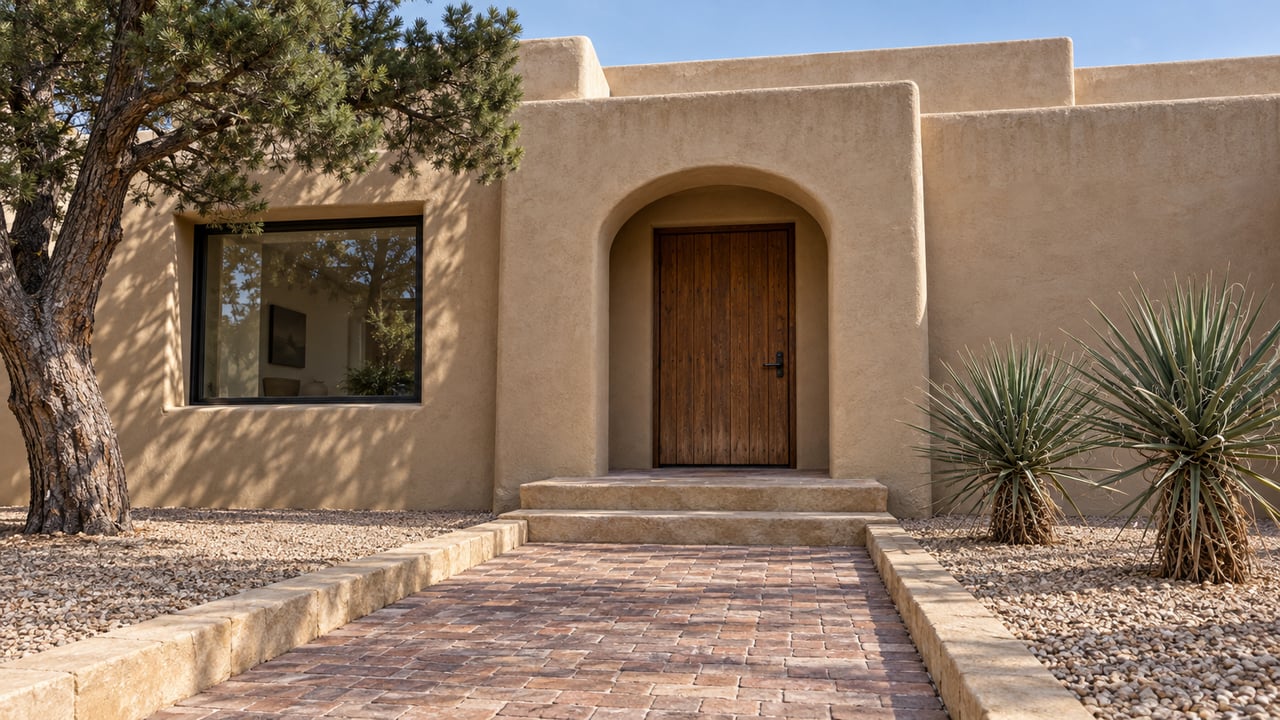
Picture a buyer's closing statement for an adobe off Canyon Road. Since October 27, 2025, one line on it has been new to Santa Fe: the High-End Excise Tax for Affordable Housing. It sits on the buyer's side, it comes due at transfer, and on a typical Historic Eastside price it amounts to a few thousand dollars or a few tens of thousands. Most people still call it "the mansion tax," and most people still describe it as a 3% tax on homes over $1 million. That description is wrong in three ways that matter if you're weighing an Eastside home against one outside the city.
The Buyer Pays, and the Title Agent Collects
The ordinance is direct about this. "The tax is due and payable by the purchaser at the time of transfer." The tax has to be paid, or an exemption documented, within 30 days after the seller delivers the documents and before anything transferring title is recorded.
In practice, the city's administrative rule puts the title agent at the center. The agent collects the buyer's completed report and the tax, verifies and notarizes the report, and submits it. If there's no title agent, the buyer files and pays the city directly within the same 30-day window.
So this is money a buyer needs to plan for along with the down payment and closing costs. It isn't a seller expense that quietly comes out of the proceeds. Whether it becomes a negotiating point between the two sides is up to the parties. The law only says who owes it.
It's a Slope, Not a Cliff
"3% on homes over $1 million" makes it sound like the whole price gets taxed once you cross the line. It doesn't. The city levies 3% on "the portion of consideration exceeding" the threshold, and that threshold has been $1,029,000 since May 1, 2026.
Here's how that works out at a few price points. The figures are simple arithmetic on the city's published rate and threshold:
| Purchase price |
Amount above $1,029,000 |
Tax at 3% |
| $1,000,000 |
$0 |
$0 |
| $1,050,000 |
$21,000 |
$630 |
| $1,200,000 |
$171,000 |
$5,130 |
| $1,500,000 |
$471,000 |
$14,130 |
| $2,000,000 |
$971,000 |
$29,130 |
| $3,000,000 |
$1,971,000 |
$59,130 |
A home that sells just over the threshold carries a few hundred dollars of tax. The charge only becomes large in the price ranges where the dollars above the line pile up. Because it rises gradually, pricing a listing at $1,025,000 instead of $1,040,000 saves the buyer about $330 in tax, a small number next to the price gap itself.
The Santa Fe Association of Realtors has warned that listings just above $1 million could see buyer hesitation or negotiation adjustments, as summarized in a Greater Albuquerque Association of Realtors post from November 4, 2025. That's a forecast about behavior. The math above is what a buyer actually pays.
The Threshold Moves Every May 1
The second thing the "over $1 million" shorthand misses is that $1 million was only the starting point. The ordinance raises the threshold every May 1 by the previous calendar year's increase in the consumer price index for the western region. If the index doesn't rise, the threshold stays where it is.
The first adjustment was 2.9%, based on 2025 CPI, and it moved the line to $1,029,000 on May 1, 2026. The city's own excise tax page leads with that figure, but a paragraph further down still describes the tax as applying to sales "exceeding $1 million." The current number is $1,029,000. A contract that closes after May 1, 2027 will be measured against whatever the next adjustment produces.
That adds a calendar factor to a transaction. On a $1.5 million Eastside purchase, each annual increase of the threshold takes 3% of the increase off the buyer's bill. At this year's adjustment, that came to $870.
Where the Tax Stops
The tax applies to conveyances of real property "located within the City." The ordinance even covers a parcel that crosses the boundary. In that case the tax is computed only on the in-city portion, based on the share of the price "fairly attributable" to it.
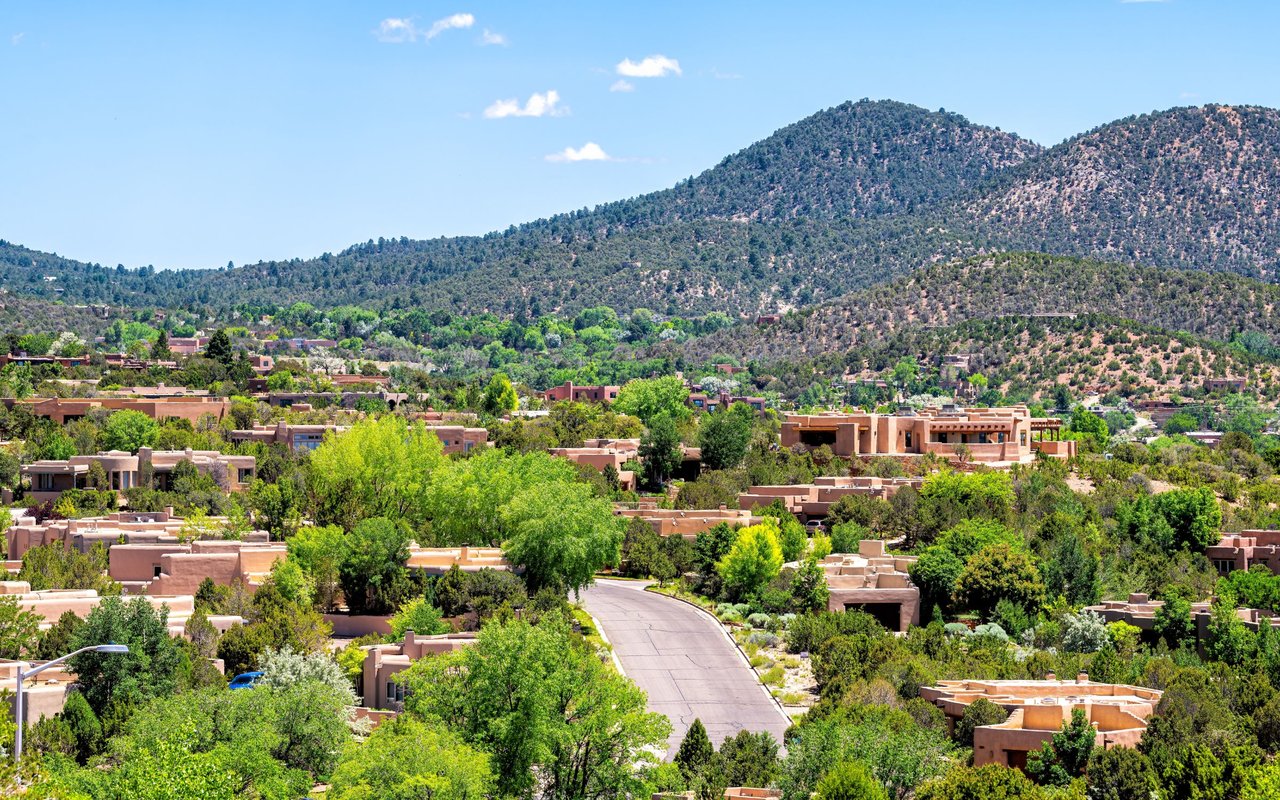
The Historic Eastside, with its walkability to the Plaza and Canyon Road, is a city neighborhood. Many of the area's other high-end markets are known for their location outside town, and the ordinance's reach ends at the municipal line. A buyer weighing a $2 million Eastside adobe against a $2 million foothills property elsewhere in Santa Fe County is weighing a difference of about $29,000 that never shows up on a listing sheet. The ordinance doesn't list neighborhoods by name, so the boundary has to be checked for each specific address.
Not every in-city deal is taxed, either. The ordinance exempts affordable-restricted units, gifts, certain inheritance and family transfers, transfers between spouses, foreclosures, commercial property, undeveloped land, and several other categories. The administrative rule defines residential property as city property with one or more dwelling units, but leaves out multifamily buildings of 16 or more units on one lot under one owner.
The Money Being Paid Is Sitting Unspent
This is where the Eastside tax differs from an ordinary closing cost. Buyers are paying it now, and the city isn't spending it yet.
Getting the tax into effect took two years:
- The legal fight began in October 2023, a month before voters approved the tax. The city says the measure passed with 73% of the vote.
- The ordinance's original effective date was May 28, 2024, but a district court injunction blocked it.
- On October 27, 2025, the Court of Appeals dissolved the injunction. The ruling turned on standing: the Realtor plaintiffs couldn't show the tax had harmed them.
- The city started collecting almost immediately. KRQE reported about $60,000 from the first three payments, and the Santa Fe New Mexican put those three payments at almost $59,000 within about a month.
- That December, one of the first buyers to pay sued in state District Court, asking the court to declare the tax unlawful and order a refund. The New Mexican reported that the city moved to dismiss on January 8, and that motion was still undecided in its latest coverage.
- The New Mexico Supreme Court then declined the Santa Fe Association of Realtors' petition to review the appellate ruling.
The Realtors' association said this about the denial, in a release quoted by the Santa Fe New Mexican:
"As a result, the issue of whether or not this tax is lawful has no final determination by the Court."
The city has planned around that uncertainty. The New Mexican reported that city officials added $1.5 million in expected revenue to the budget, then reversed course after the second lawsuit and said they would hold the payments unspent until all litigation is resolved. Santa Fe's adopted FY27 budget projects $1.5 million in high-end excise tax collections, says those collections are being held unspent because of the ongoing challenges, and lists continued defense of the tax among the City Attorney's FY27 goals.
For an Eastside buyer closing this month, that means paying the full tax at transfer, whether through the title agent or directly to the city within 30 days. The last word on whether it's lawful will come from a courtroom, and the money goes into a fund the city has chosen not to touch for now.
FAQ
Does the seller pay any part of it?
The ordinance makes the purchaser liable. How a buyer and seller handle that cost in negotiation is up to them.
Is the threshold still $1 million?
No. It's been $1,029,000 since May 1, 2026, and it adjusts again each May 1 if the western-region CPI rose the previous year.
Does it apply to a vacant lot inside the city?
Undeveloped land is on the ordinance's list of exemptions, along with commercial property and several kinds of family and estate transfers. The full text of Chapter 18-18 spells out each one.
Where do questions go?
The city takes questions at [email protected].
This post is general information, not legal or tax advice. Whether the tax applies to your purchase, and how much, is a question for your title company, attorney or tax professional.
If you're comparing an Eastside home with a property outside the city, we'll run the excise tax math on both before you write an offer, so the boundary shows up in your numbers. Call Leland Titus and we'll start with the address you have in mind.