A buyer touring three homes in Las Campanas in the same afternoon can come away with three different HOA numbers, three different club situations, and a water bill from an entity that never comes up in the same conversation as any of it. That's not an inconsistency in how agents explain the community. It's how the community is built.
Las Campanas is not one HOA with one fee schedule. It's a master association layered on top of 29 separate Estates, each with its own covenants and its own assessment structure, sitting alongside a private club that has nothing to do with homeownership and a water utility that bills independently of both. Ask "what's the HOA fee" and you're really asking three separate questions at once, and the answer to each one depends on which Estate the lot happens to sit in.
Three Systems, Not One
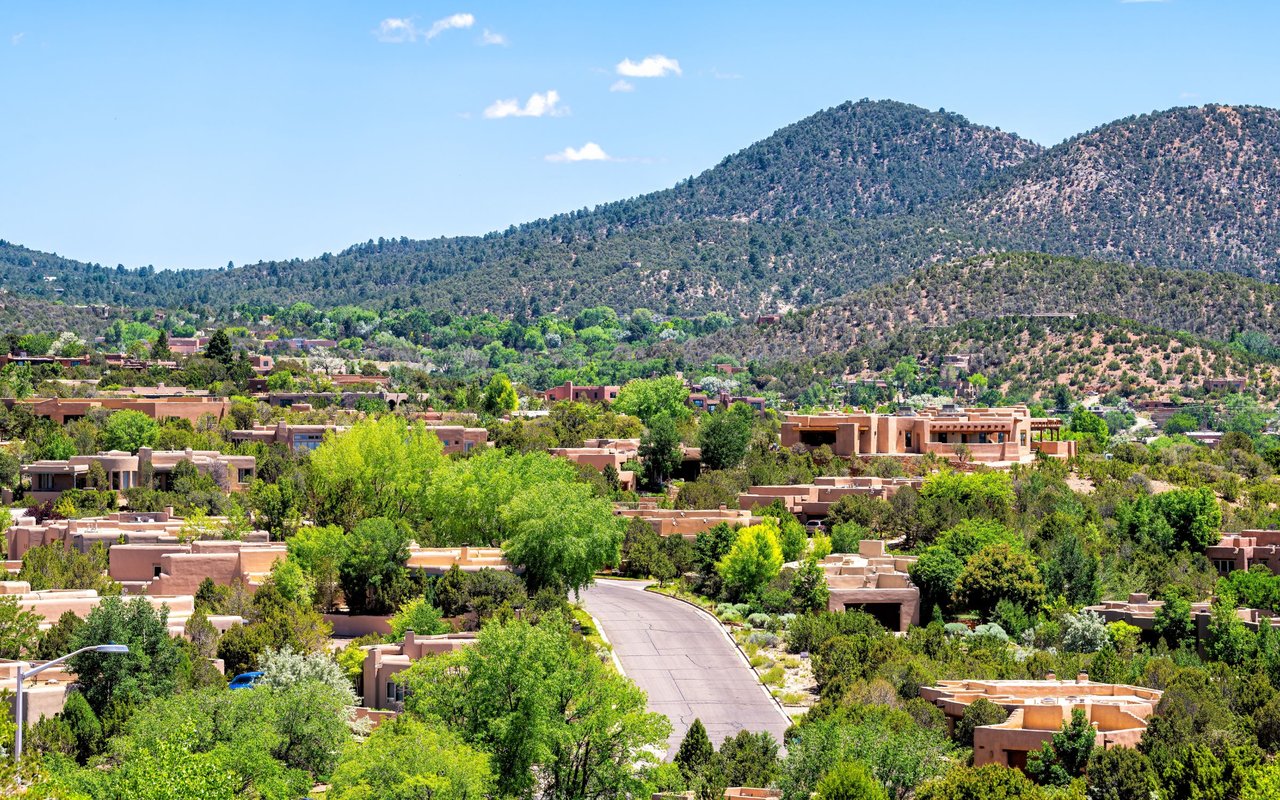
The Las Campanas Owners Association's own CC&R page lays out the structure plainly: Las Campanas currently consists of 29 estates, or neighborhoods, generally consisting of 50 to 100 lots, most with custom homes, and many of those estates carry their own covenants, conditions, and restrictions in addition to the master association's governing documents. Estates I and II were the original foundation of the community, and the platted maximum across all estates is 1,717 lots, with slightly under 1,000 developed or held open by owners preserving views.
That single fact, that each estate has its own CC&Rs layered on top of the master documents, is the reason two homes a quarter mile apart can carry meaningfully different dues, different design review requirements, and different rules about what you can build.
Separate from all of that sits The Club at Las Campanas. It owns its own real estate, sets its own membership rules, and has no ownership requirement at all. Separate again is the Water Co-op, an independent nonprofit that serves as the sole water provider for every estate except Estates I and II, and handles wastewater processing across the entire community. Three organizations, three fee schedules, one gate.
What the 2026 Numbers Actually Show
The published 2026 assessment schedule for Las Campanas shows just how wide that estate-to-estate gap runs. Annual dues range from $4,296 in Dayflower or Estates II up to $16,092 in a Club Casitas scenario, a spread of nearly four times between the least and most expensive estates, before anyone has joined the club or paid a water bill.
| Item |
Amount |
| Annual dues, Dayflower / Estates II |
$4,296 |
| Annual dues, Club Casitas scenario |
$16,092 |
| Statement fee |
$150 |
| Transfer fee (at sale) |
$150 |
| Design review fee, per phase (conceptual, preliminary, final) |
$2,500 each |
The assessments themselves are payable quarterly and the schedule notes that fees are subject to change, which is worth taking literally rather than as boilerplate. A separate estimate puts the mandatory master association contribution, the piece that funds common-area maintenance, paved roads, the 24-hour patrol, and on-site EMT and paramedic response, at roughly $3,800 to $4,000 a year. That figure lines up with the low end of the estate-level range. The higher numbers on the published schedule reflect what individual estates add on top through their own reserve and beneficial assessments, which is exactly why a buyer can't take one estate's dues and assume they apply next door.
The Estate You Buy Into Decides More Than the View
This is the detail that trips up buyers who've done their homework everywhere except here: confirming which estate a specific lot belongs to before writing an offer, not after. The estates were released in stages over more than three decades, starting with Estates I and II in 1991, moving through Estates III, IV, and V, the Club Estates, Ranch Estates, and Park Estates in the mid-to-late 1990s, and continuing through The Estancias, The Pueblos, Silver Mesa, and Del Corazon in the 2000s.
Each of those releases came with its own CC&Rs, negotiated at a different point in the community's history, under different reserve funding assumptions. A newer estate with less deferred infrastructure work might carry lower dues than an older one mid-cycle on road repaving or irrigation upgrades. None of that shows up in a listing's HOA field. It shows up when a title company or the association itself pulls the estate-specific documents, which is why an estoppel request showing current dues status, any fines, and pending special assessments belongs on the to-do list before closing, not after.
The Club Isn't Included, and It Isn't Optional the Way People Assume
The most common misunderstanding is the opposite of what buyers expect. People assume buying in Las Campanas means they're buying into the club. They're not. The Club at Las Campanas states plainly that membership is by invitation only and that property ownership is not required to join, which means it works in both directions: owning a home doesn't guarantee access, and access doesn't require owning a home. Membership itself is capped, limited to 525 Golf memberships and 350 Social memberships, to protect the experience for the people already in.
Initiation costs are not published by the club itself, and estimates online vary widely depending on how recent the source is. The most current figures available put Equity Golf initiation in the neighborhood of $150,000 and Social membership initiation between $75,000 and $100,000, with monthly dues layered on top and both figures described as market-based and subject to change. Given that range, and given that club sources themselves say to confirm directly with the membership office, anyone for whom golf, the Hacienda Clubhouse, or the equestrian center is the reason for buying should get current numbers in writing before the club becomes a line item in the offer math.
There's a second club question that only comes up at the closing table: if the seller holds a membership, can it transfer to the buyer, and does a transfer carry its own fee. That's a conversation with the membership office, not an assumption baked into the purchase contract.
The Water Co-op Bills on Its Own Schedule
The third layer is easy to miss because it doesn't look like an HOA cost at all. The Las Campanas Water Co-op is a separate independent nonprofit that serves as the sole water provider for every estate except Estates I and II, which draw from the county system instead, and it handles wastewater processing for the entire community regardless of which water system a given estate uses. That means two homes in different estates can have entirely different water arrangements, and a buyer comparing carrying costs across estates needs to check which utility applies to the specific lot rather than assuming uniformity.
The Costs That Show Up After You Think You're Closed
Design review is where the layered structure has the most practical bite for anyone planning to build or renovate. The current fee schedule lists non-refundable design review fees of $2,500 each for conceptual, preliminary, and final review on a new residence, with smaller fees for less extensive projects. Miss that process and the association's rules allow fines of up to $250 per day for uncured violations, and separately, fines of up to $10,000 for work done without approval or outside approved conditions. For anyone buying with plans to add a pool, solar panels, or a significant addition, that review sequence needs to start before the shovel does, not after.
The System Keeps Growing, Not Simplifying
If the layered structure read like a legacy quirk from the 1990s, it might be tempting to assume the newer sections of Las Campanas are cleaner. They aren't. Mesa de Oro, released in 2025 with most homesites around 1.5 acres, and The Villages, added to the plan around the same time, are the newest additions to the same 29-estate framework, each arriving with its own CC&Rs the same way Black Mesa did in 2017 and Tesoro Enclave did in 2022. The community isn't consolidating toward one fee schedule as it matures. It's adding estates the same way it always has, one covenant document at a time.
Frequently Asked Questions
Does buying a home in Las Campanas include club membership?
No. Club membership is separate from homeownership, granted by invitation and Board approval, and is not required to purchase or own property in the community.
Is there one HOA fee that applies across all of Las Campanas?
No. Annual assessments vary by estate and can include master, reserve, and beneficial components, so the correct question is what the fee is for the specific estate a property sits in, not what "the" Las Campanas fee is.
Can I rent out a home I buy in Las Campanas?
Leases must run at least 30 consecutive days, a new lease can't begin until the prior one ends, and a copy of each lease must be provided to the association before it starts. Bed-and-breakfast style short-term use is prohibited.
If you're weighing a specific Las Campanas estate against another Santa Fe option and want the dues, club questions, and water arrangement sorted out before you write an offer, Leland Titus can walk through the estate-specific documents with you and tell you what actually applies to the property you're looking at.